Getting There
Rubzem can't draw. In four hours and one sentence he shipped a 14-chapter storybook about a kid, a dog and the long way home.
- build
- 4 hours from scratch · one-sentence ask
- model
- Fable 5.2 on Tesana
- scope
- 14 chapters · 6 travel modes
- look
- Hand-painted 2D · all assets procedural
- rules
- No fail states · no timers
- author
- S (@Rubzem) — busy vibe coding games
- release
- Free on Tesana · v5 the next day
- players
- 3,259 · 100 hours played · 20–50 concurrent
- reception
- 149K views · 2.5K likes · 138 replies
- published
- 2026-11-18
- updated
- 2026-11-18
Contents8 sections · 0 items
The ask was a feeling
Rubzem describes the brief in one sentence: "I asked Fable 5.2 for a beautiful & low-cortisol 2D game with a hand-painted feel. Made from scratch in 4 hours."
That is not a specification. There is no genre breakdown, no reference sheet, no list of systems. There is a mood and a constraint, and the constraint is the part that makes the post land: "I can't draw, but somehow I made a little storybook game about a kid, a dog and a long way home."
Four hours later the thing existed. It is called Getting There. It runs in the browser and has fourteen chapters. The surprise is not that a model can generate a game. It is that someone who cannot draw could ask for a specific feeling and get a world that looks like it was painted by hand.
Four hours, fourteen postcards
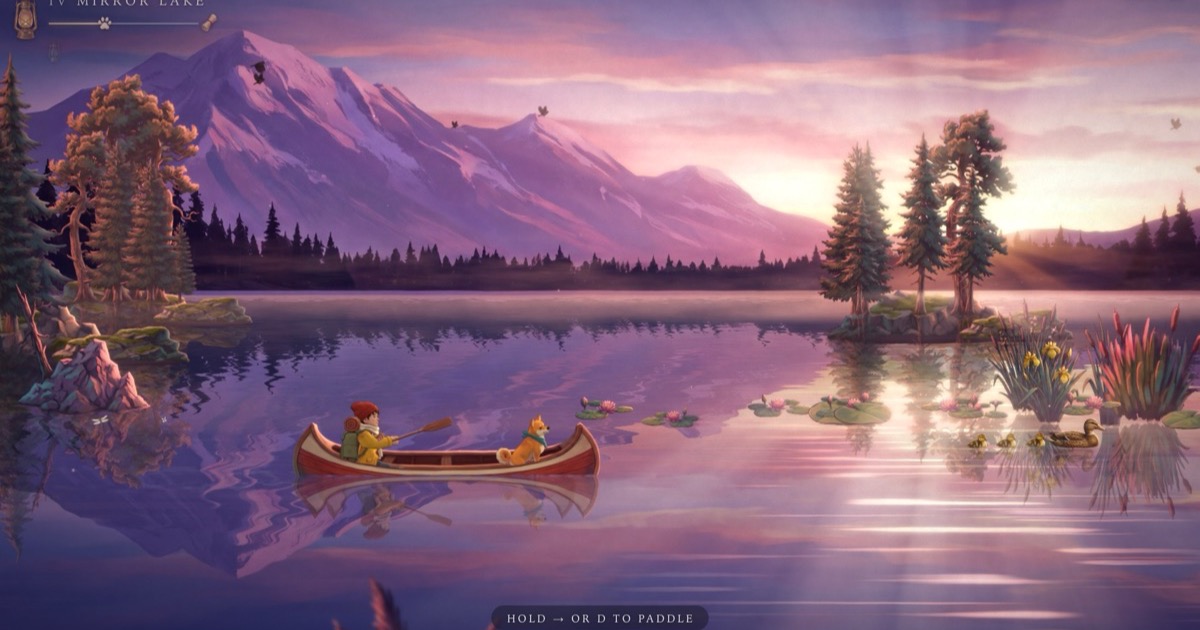
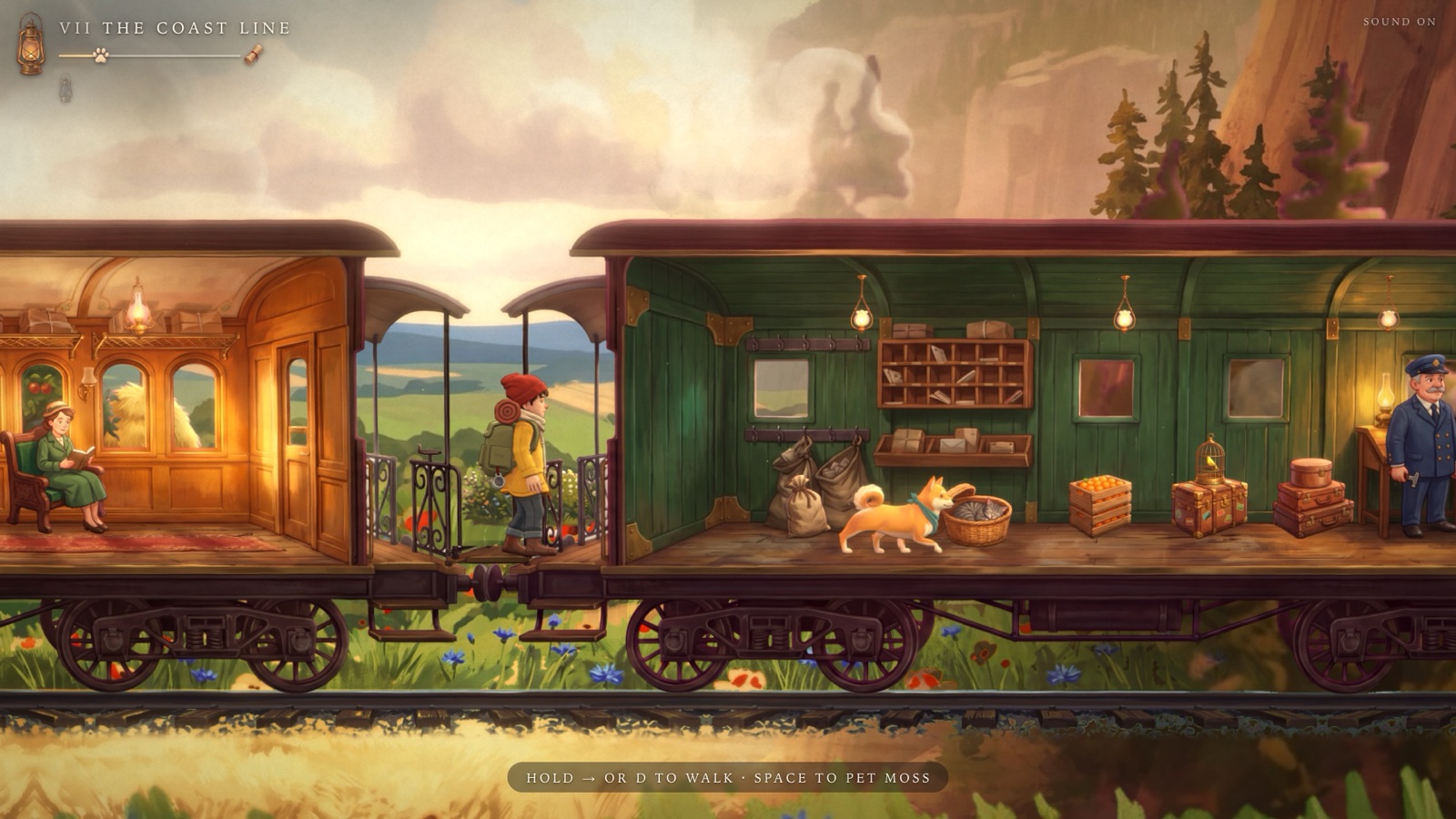
You travel by foot, canoe, train, hot air balloon, mine cart and biplane. Each chapter changes the verb, not the mood. You paddle across a lake at sundown, fire a balloon's burner over autumn hills, walk the length of a green train carriage, and keep moving toward home.
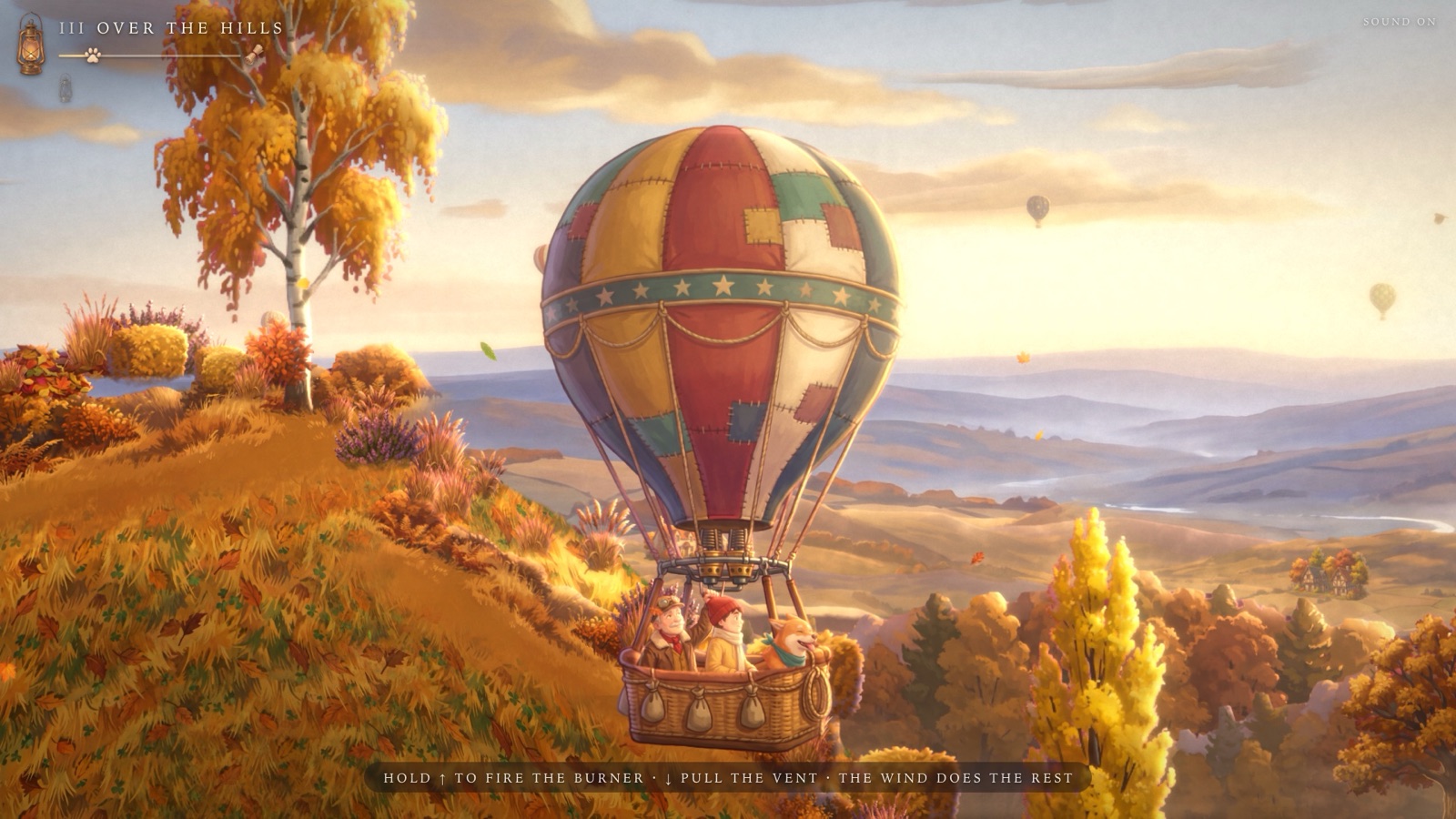
The rules are unusually gentle. There are no fail states and no timers. You can pet the animals, help the people you meet, and play as Moss, the dog, for a while. The chapter titles read like postcards: Mirror Lake, Over the Hills, Glowtide Cove, The Coast Line, Lantern Peak, The Way Home. The progress bar runs from a paw print to a bone.
All of the art and sound are procedural, which is the other half of the trick. Tesana, the prompt-to-game platform, generates the assets and handles the engine; Rubzem names Fable 5.2 as the model doing the build. He did not learn to draw in four hours. He directed a system that can.
What the four hours did not buy
The game shipped, then kept shipping. Version 4 fixed loading on iPhones and iPads; version 5 fixed the sound and mute controls. Both updates landed the next day. That is the real timeline of a four-hour build: the build is fast, the repairs start immediately.
The replies split along the same line. Doug Tarr wrote, "Pretty game, it did lower my cortisol. Time to raise it with another coffee." HarveyS was less kind: "Not even close. Its full of animation bugs, floating objects, and an AI generated story." Mike Swarm added the developer's version of the same thought: he built a 12-level game with Fable in about eight hours, "but to make it truly good and unique, it's taking an additional 6-8 weeks."
Both things are true. Four hours produced a playable, often beautiful first draft. It did not produce the six to eight weeks of animation fixes, object placement and writing that turn a first draft into a game you would defend. He is already turning it into a process: in the replies he promises a full guide to making games "the coming days" — the process, not just the result.
The part he actually authored
He cannot draw, but he can refuse. "Low-cortisol" is not a genre; it is a set of decisions: no fail states, no timers, no pressure to be good at it. You are allowed to stop and pet the dog. The game even lets you be the dog for a while.
That is the part the model did not choose for him. Generated games tend to arrive with challenges, scores, reasons to lose. Getting There is built around the opposite: the journey is the product. The Tesana page says it plainly — "It's about the journey, not the destination" — and the mechanics actually enforce it. The hand-painted look is generated. The decision that you cannot fail is his.
The title is the same idea. Not Getting Home. Getting There.
The people with the most to lose
Put the four hours next to a studio pipeline and the anxiety is easy to understand. The people with the most to lose are not beginners. They are the ones who spent a decade in games or film learning lighting, animation, level pacing and sound — the craft that used to be the moat. A person who cannot draw ships a hand-painted-looking game in an afternoon. The moat moved.
But the same afternoon is an opening. For an independent developer, the old equation was brutal: months of production, savings burned, then a cold launch that might tell you nothing. Trial and error was too expensive to run more than once. Now a playable demo can exist before the family gets home. The afternoon does not even have to be spent at the desk; the model can keep building while you are at the gym or out with your family. The scarce resource shifts from production hours to judgment: what to ask for, what to keep, what to fix.
Rubzem's numbers show both sides. More than 2,000 players in under a day; 3,259 on the game page, 100 hours played, 20 to 50 people online at once. That is not a hit, but it is real market signal for four hours of work. The version history is the other half: v4 fixed iPhones and iPads, v5 fixed sound, both the next day. The build is cheap now. The polish is not.
Whose ability is it?
The uncomfortable question is in the screenshots. The hand-painted look came from a prompt. Is that Rubzem's taste or the model's capability?
The honest answer is that the two are entangled. He supplied the mood ("low-cortisol"), the refusals (no fail states, no timers), the dog, the title, and the decision to make the journey the product. The model supplied the brush. A prompt is a compressed design document, and the compression hides the labour. That is why the result looks like magic: the decisions are invisible in the output.
Then there is the licensing question, which is harder. These models were trained on a vast amount of open-source code; the code they generate is not necessarily open. Getting There is free to play, but no repository is attached. Tesana is a platform, not a codebase. The input was collective; the output is private. That asymmetry has no settled answer yet, and it is the part of the boom that will be argued over longest.
Act first
Everyone has an answer to these questions. None of the answers are settled. The only way to get better evidence is to make something and put it in front of people. The cost of a weekend experiment is now low enough that waiting for the theory to settle may be the more expensive choice.
Build the demo. Watch where players get stuck. Fix the floating objects. Decide what you will not compromise on — the no-fail rule, the dog, the ending. Iterate, ship, validate, repeat. The rules of this new workflow are being written by the people who ship, not by the people who argue about it.
Press play at the canoe
When you reach Mirror Lake Hold → or D to paddle. Nothing is chasing you. That is the whole design in one screen: a boy, a dog, a canoe and a sunset, with no timer in the corner.
The four hours are real. They are also the headline, not the whole story. The version history is the timeline: fixes the next day, a polish pass measured in weeks, a guide still to come. What is genuinely new is not the speed. It is that a person who cannot draw can now specify a feeling precisely enough to get it made, and then has to decide what belongs inside it.
Play it for the canoe. Stay for the fact that the progress bar runs from a paw print to a bone.
Sources
- [1]
- [2]
- [3]
- [4]
- [5]
- [6]
- [7]
- [8]
Related cases
- → PapertrailsExperiment
- → fighterExperiment
- → Crumb ColonyExperiment