Papertrails
一句 prompt、盲评循环和一张金色参考图:Shikhar 如何用 three.js 做出一个不断展开的纸艺世界。
- method
- 每个部件一个 subagent · 盲评 A/B
- models
- Fable 5.2 + Opus 5.5
- stack
- three.js · Vite · MIT
- source
- 约 900 KB JS · 50 多个模块
- assets
- 19 MB 模型、贴图与音频
- biomes
- 上线 5 种 · 探索 15 种 · 昼夜
- target
- 中端笔记本稳定 60 fps
- author
- Shikhar — 用 AI 做酷东西
- reception
- 5.1 万浏览 · 1400 赞 · 85 条回复
- published
- 2026-11-18
- updated
- 2026-11-18
目录共 8 节 · 0 条
先写 brief,再看到游戏
Shikhar 发的东西里最有用的不是游戏,是那份 prompt。最后上线的名字是 Papertrails;那份文档里几乎其他东西都活了下来。下面按他贴出的图片逐字抄录全文,因为后面讲的都是他拿这份文档做了什么。
原始 prompt
逐字抄录自他 thread 里的 prompt 图片:
Build "Pop-up Atlas", a browser 3D walking toy, in Three.js.
Reference none yet. First generate 4-6 concept frames with imagegen (tilt-shift papercraft diorama, tiny paper traveller, terrain folding up out of an open book, warm lantern light). Collect photos of real pop-up books and papercraft dioramas. These become the target. Match their look and tactile paper feel exactly.
Details small paper traveller walks across an endless open pop-up book. Terrain ahead folds up out of the flat page: hinged paper tiles (hills, trees, houses, bridges, rivers) rise on springs, overshoot and settle with a slight wobble. Wave function collapse picks tiles so neighbours always connect. Tiles behind fold back flat. Look: matte cardstock, limited warm palette, visible paper edges and fibre, layered cut-paper silhouettes, soft shadows between layers, high-angle tilt-shift camera with strong DOF blur, warm key light + cool fill. Every fold gets a soft paper "flap" sound with varied pitch. Controls: WASD or click to walk, smooth camera follow. No physical-looking UI, no external brand assets.
Tools Blender (tile models with hinge pivots, traveller, fold animations, baked paper materials → glTF). Codex CLI imagegen (concept frames, paper textures, printed details). Web Audio procedural paper sounds (or samples if better).
How to work autonomous, no questions; log assumptions. Study reference → checklist of components with measurable targets. One sub-agent per component, each owns its files, project stays running. Loop on every component: separate harsh blind critic, A/B side by side vs reference in random order, says which is better + fixes. Continue until critics can't reliably pick the original and are wowed. Also judge fold motion/spring feel, walking feel, sound, performance (steady 60 fps mid-range laptop). Revert anything that makes it worse. Append-only log. User's explicit instructions override critics.
Deliver playable Vite build + run instructions, 30-second gameplay capture, final side-by-sides and scores.
这不是“做个纸艺游戏”,而是一张可以被检查的清单。区别就在这里。
让 agent 自己造参考
他没有从代码开始。agent 先用 GPT Image 生成概念图,再收集真实的立体书照片,然后测量它们的颜色、边缘和光线。参考在变成风格之前,先变成了一组数字。
接下来是 agent 做不了的决定:Shikhar 亲手挑了一张图作为具体的风格基准。agent 截取游戏画面,为每个 biome 生成一张“gold-style”目标图;动物也照同样方式设计。从这一刻起,每一次渲染都有一个明确的对象可以失败。
每个部件一个 subagent,评审不知道哪版是原版
他 prompt 里关于工作方式的规则,是整个项目最个人的部分。读起来不像愿望,更像一份评审协议:agent 自主工作、不提问、把假设记下来;先把参考整理成一份带可测目标的部件清单;每个部件一个 subagent,各自拥有自己的文件,项目始终保持可运行;每次 build 都交给一个独立的、严厉的盲评者,两版并排、随机排序、对着参考比;直到评审“can't reliably pick the original and are wowed”才停。翻折的动作、弹簧手感、行走手感、声音、以及中端笔记本稳定 60 fps 也要一起评;任何让结果变差的改动都要回退;日志只追加;用户的明确指令高于评审。
仓库里还留着这些分工边界。文件开头写着 OWNER: render agent、OWNER: fold agent、OWNER: wfc agent;每个 agent 管自己的配置和调参记录。盲评者是独立的,而且两版顺序随机——他们没法偏袒自己刚做出来的那一版。
这已经不是“写 prompt”了。他设计的是一个评审流程,然后让它在不提问的情况下自己跑。
金色目标,五帧
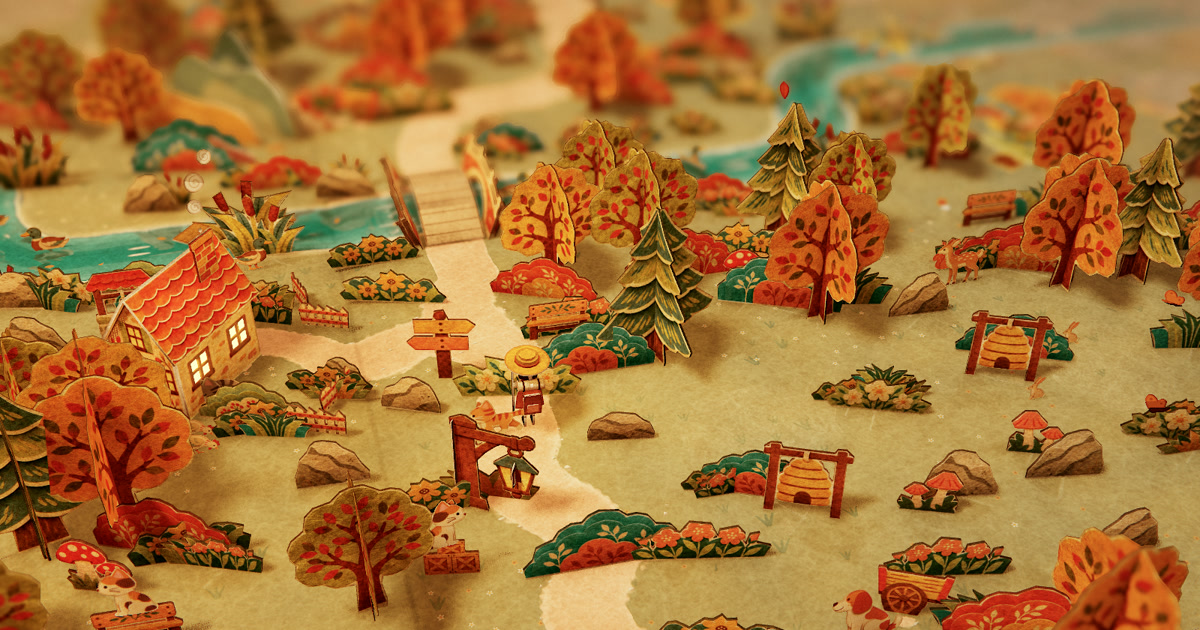
他把同一个机位按每一轮发了出来:first build、art pass、biome pass、gold pass、now、gold target。第一版又亮又空;art pass 把占位的树换成了印刷纸片;biome pass 把地面填满道具;gold pass 加进村庄和灯笼光。最后一张是目标,不是游戏;“now”和“gold target”之间的距离,就是这套循环存在的理由。
然后是数字。相机俯角从 46° 调到 42°,对齐参考图更低的三分之四视角。跟随距离从 14.8 到 12.6 再到 10.8,因为金色参考的取景紧了大约 1.5 倍。饱和度从 1.04 降到 0.92;模糊半径从 19 降到 12.5;动物密度从 1 提到 1.5,因为金色参考的一帧里大约有十只动物。这些不是情绪板上的形容词,是带方向的测量值。
他也会推翻 agent,代码里留着证据。一只本来会认领旅人的猫被关掉了,注释是 /* user 2026-11-17: no companion */;跟随行为被设成零,注释是 /* user 2026-11-17: animals never follow the traveller */。盲评能比较渲染,但决定不了猫该不该跟着你。那是他的判断。
最后留下的地图
风格探索里有十五种 biome,最后上线的是五种:原点是 heartland,东边沙漠、西边雪地、南边花林、北边松林,各自都有昼夜。原点永远是那片温暖的秋日农田,四个邻居的位置固定,所以每种 biome 都在出生点大约十二格以内。
世界用 wave function collapse 生成,地块沿弹簧升起、在旅人身后折回平面;动物会吃草、啄食、惊散、停在枝头;按 Tab 或 E 打开一张会随着探索自己画出来的地图册。地图朝每个方向不断生长。
仓库里到底有什么
这不是一个 54 秒的假视频。公开仓库里约有 900 KB JavaScript、五十多个模块,加上 GLB 地块与旅人模型,以及 19 MB 的模型、贴图和音频。运行时只依赖 three.js,许可证是 MIT。可玩版本挂在 GitHub Pages,URL 参数能改 seed、画质、静音、夜晚、生物和动物。那段视频就是这个版本的录屏。
属于他的那一部分
代码是模型写的,标准是他的。“Continue until critics can't reliably pick the original and are wowed”不是 prompt 技巧,是一个品味阈值,而且他一直在用数字把它收紧。仓库里最个人的东西,是那些记录他否决意见的注释,以及把某个值从一个测量数挪到另一个测量数的“fixer”记录。
如果只从他的 build 里拿走一件事,拿走顺序:先参考,再标准,再代码,最后是一个不知道自己在看哪一版的评审。纸艺世界是产物,循环才是方法。
来源
- [1]
- [2]
- [3]
- [4]
- [5]
- [6]
- [7]
- [8]
- [9]Papertrails — play in the browserGitHub Pages